Mangalnath Temple – Special Puja Booking
Experience powerful astrological remedies at Mangalnath Temple, renowned for Mars/Mangal dosh pujas and planetary corrections.
Official Information Only
About Mangalnath Temple: The Birthplace of Mars
Mangalnath Temple is a sacred shrine dedicated to Lord Mangalnath, the deity who governs the planet Mars (Mangal/Mangal Graha). According to the Puranas, Ujjain is the **birthplace of the planet Mars**. It is believed that during the battle between Lord Shiva and the demon Andhakasura, a drop of Shiva's sweat fell on the ground here, and from that drop, the planet Mangal was born. This makes Ujjain the most potent location in the world for Mars-related remedies.
The Cosmic War: Shiva vs Andhakasura
The legend of Mangalnath is deeply intertwined with the Skanda Purana, which provides a detailed account of how this sacred site came into existence. During the ancient era, a formidable demon named Andhakasura had gained immense power through penance. He became virtually invincible and began terrorizing the three worlds.
Lord Shiva eventually confronted the demon in a fierce battle. However, Andhakasura possessed a unique boon: every drop of his blood that fell to the ground would transform into another demon (a myth similar to Raktabija). This made the battle seemingly endless. As Shiva fought with intense rage (Rudra-Roopa), drops of his divine sweat fell onto the parched earth of Ujjain.
One such drop of Shiva's sweat, charged with his ascetic power and the heat of battle, fell at the exact spot where the Mangalnath Temple stands today. From this drop, the planet Mars (Mangal) was born. The Earth (Goddess Prithvi) nurtured the child, which is why Mars is also known as 'Bhauma' (Son of the Earth). After his birth, Mangal Dev performed intense penance to Lord Shiva, who then granted him a permanent place in the celestial council as one of the Navagrahas (Nine Planets).
This divine origin story explains why Mangalnath is considered the **'Petal of the Earth's Heart'** and the primary power center for Mars in the universe.
The Ancient Meridian: Where Time and Mars Intersect
Beyond mythology, Ujjain has been the 'Greenwich' of India for millennia. Ancient Indian astronomers, including the legendary Varahamihira and Vararuchi, identified Ujjain as the point where the 0-degree meridian (the prime meridian of ancient India) crosses the Tropic of Cancer.
The Mangalnath Temple is situated precisely on this intersection. In the modern era, calculations by the Department of Science and Technology confirm that the Tropic of Cancer passes through Ujjain, and specifically, the energy lines around the Mangalnath Temple exhibit unique gravitational and magnetic properties.
During the summer solstice (June 21), when the sun is directly over the Tropic of Cancer, the shadows at Mangalnath disappear at noon—a phenomenon that has been observed and recorded by priests and visitors for centuries. This geographical 'Zero Point' is believed to be the reason why prayers offered here reach the celestial bodies faster and with higher intensity.
Geographically, the temple is situated at a unique point where the **Tropic of Cancer** intersects the ancient meridian of Indian astronomy. This alignment is said to create a specific electromagnetic environment that enhances the efficacy of planetary rituals.
The Significance of Bhat Puja (Rice Worship)
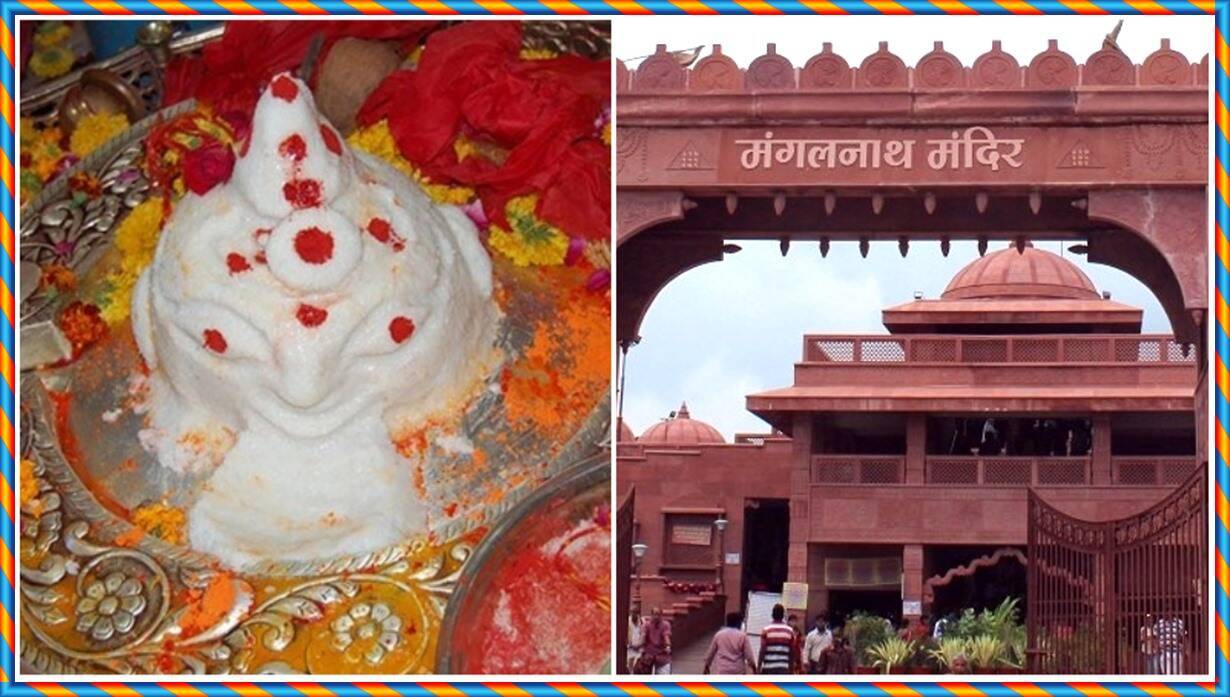
The most famous ritual at Mangalnath is the **Bhat Puja**. In this unique ceremony, the Shivalinga (representing Mangal) is completely smeared and covered with cooked rice. Since Mars is considered a 'hot' planet (Agni Tattva), the cold rice is offered to 'cool' the deity and pacify the aggressive energy of the planet.
Devotees believe that by offering rice to the Lord on a Tuesday, they can neutralize the negative effects of Mangal Dosh in their horoscopes, ensuring a harmonious married life and success in professional endeavors.
The Science Behind the Rice: Why Bhat Puja?
While many temples use water, milk, or honey for Abhisheka, Mangalnath is world-famous for its **Bhat Puja**. There is a dual significance—astrological and biological—to the use of rice in this ritual.
Mars is characterized by the element of fire ('Agni Tattva'). In human biology and astrology, an 'afflicted' Mars causes excess heat in the blood and mind, leading to anger, skin problems, and impulsive decision-making. Rice (Bhat), when cooked and cooled, has the highest 'Sheet-Virya' (cooling potency) among all grains.
By smearing the Shivalinga with cooled rice, devotees symbollically 'cool down' the fiery nature of Mars. Curd (Yogurt) is often mixed with the rice to further enhance the cooling effect. This act of 'cooling the deity' reflectively cools the devotee's own internal fire, bringing mental peace and emotional stability.
Step-by-Step Bhat Puja Ritual
- 1 Panchamrut Abhishek: The ritual begins with the bathing of the Linga with the five sacred elements (milk, curd, honey, sugar, and ghee).
- 2 Jala-Dhara: Continuous chanting of the 'Mangal Gayatri Mantra' as water is poured, invoking the planet's presence.
- 3 Bhat-Smaran: Cooked rice is delicately applied to the Linga. It is not just smeared but often 'sculpted' to give the Linga a majestic, smooth appearance.
- 4 Shringar: Once the rice covers the Linga, it is decorated with flowers, red sandalwood (Chandan), and jewelry.
- 5 Aarti & Prasad: The final offering of lamps, followed by the distribution of the 'Bhat Prasad' which is considered highly sacred.
Who Needs Mangal Dosh Nivaran?
In Vedic astrology, a person is called a **'Manglik'** if Mars is placed in the 1st, 4th, 7th, 8th, or 12th house of their birth chart. This placement is often associated with high temper, delays in marriage, and friction in relationships. While modern science may label it as energy alignment, millions of people worldwide travel to Ujjain to perform this shanti (peace) ritual before getting married.
The temple follows traditional Vedic rituals and is known for its authentic puja procedures performed by experienced priests who specialize in planetary remedies. In 2026, the temple administration has streamlined the booking process to accommodate the increasing number of international spiritual seekers.
Understanding Mangal Dosha (Kuja Dosha) in Depth
Mangal Dosha is perhaps the most misunderstood concept in Vedic astrology. While it is often associated with fear, it is essentially about **Energy Management**. Mars represents our drive, passion, and vitality. When Mars is placed in certain positions (1st, 4th, 7th, 8th, or 12th house), this energy is too concentrated for the 'delicate' area of relationships.
The Two Types of Mangliks:
Anshik Manglik (Low Intensity)
Occurs when the dosha is present but weakened by favorable planetary aspects or placements. Usually resolved easily by simple prayers or after reaching age 28.
Purna/Double Manglik (High Intensity)
Occurs when multiple conditions for the dosha are met in both the Lagna chart and the Moon chart. Requires systematic rituals at Ujjain for effective resolution.
Common Myths Debunked:
- Myth: A Manglik person can never marry a non-Manglik.
Reality: If the other partner has a strong Saturn or Jupiter placement, or if specific rituals are performed, the marriage can be very successful. - Myth: Mangal Dosha leads to the death of the spouse.
Reality: This is an extreme ancient interpretation. In modern times, it mostly manifests as temperamental differences and high-voltage arguments that can lead to separation if not managed. - Myth: Doing the puja once fixed everything forever.
Reality: The puja realigns your energy, but conscious behavioral changes (managing anger) are also necessary.
Advertisement
Pujas Requiring Booking
Primary Mangal Dosh Pujas
- • Mangal Shanti Puja (Mars Pacification)
- • Mangal Graha Shanti Havan
- • Mangal Kavach Puja
- • Mangal Dosha Nivaran Puja
- • Red Coral (Moonga) Installation
Kuja Dosha Remedies
Powerful rituals to neutralize Mars afflictions
Marriage Delay Solutions
Specific pujas for relationship harmony
Career Obstacles
Remedies for professional challenges
Health Issues
Healing rituals for Mars-related ailments
Ideal Days for Puja
📅 Most Auspicious Days
- Tuesdays (Mangal's day)
- Mangal transit days
- Full moon days
- Eclipses
- Astrological conjunctions
📅 Recommended Months
- April-May (Mars season)
- During Mars mahadasha
- Before major life events
- During remedial periods
Duration & Process
Short Puja
2-3 Hours
Basic rituals
Standard Puja
4-6 Hours
Complete ceremony
Extended Puja
8-12 Hours
Comprehensive remedy
Puja Process Overview
- Initial consultation with priest
- Sankalp (intention setting)
- Purification rituals
- Main puja ceremony with mantras
- Havan (fire ritual)
- Prasad distribution
- Post-puja guidance
Advertisement
Official Booking Information
Important Booking Notes
- • Advance booking recommended (7-15 days)
- • Priest availability subject to change
- • Special dates may require longer notice
- • Personal items may be required for puja
- • Cancellation policy applies
Booking Process
Contact the temple administration directly or use authorized booking channels for authentic Mangalnath pujas.
Official Temple BookingPractical Guide for Visiting Mangalnath
How to Reach from the City Center
Mangalnath Temple is located slightly outside the main temple zone of Ujjain, on the banks of the Kshipra river.
- From Mahakal Temple: approx 5-6 km. Auto-rickshaws charge ₹100-150. E-rickshaws are available for ₹20-30 on sharing basis.
- From Railway Station: approx 7 km. Pre-paid taxis and autos are the best bet.
- Local Bus: Ujjain City Bus service connects prominent stops to Mangalnath (Area B).
Timings & Best Visiting Hours
Temple Hours: 6:00 AM to 9:00 PM
Puja Slots: 7:00 AM to 2:00 PM (Best for Bhat Puja)
Note: On Tuesdays, the temple gets extremely crowded. If you have an pre-booked puja, arrive by 6:30 AM to avoid the rush.
Where to Stay Nearby?
While most people stay near Mahakal Temple, those obsessed with Mars remedies often prefer staying closer to Mangalnath for early morning rituals.
Economy
Mangalnath Dharamshala (Govt), Local Ashrams near Kshipra banks.
Mid-Range
Hotels on the bypass road (Indore-Ujjain road) are just 10 mins away.
Premium
Luxury retreats located on the outskirts towards Indore offer better amenities.
Advertisement
Spiritual Circuit: Places to Visit Near Mangalnath
Since Mangalnath is in the northern part of Ujjain, you can easily cover these nearby sacred sites in the same half-day trip.
Siddhavat (1.5 km)
The sacred Banyan tree on the banks of Kshipra, equivalent to Gaya for ancestral rites (Pind Daan). Ancient legends say the Mughal kings tried to destroy it, but it regenerated overnight.
Sandipani Ashram (2 km)
The Gurukula where Lord Krishna, Balram, and Sudama received their 64 arts and 14 sciences of education. You can see the Gomti Kund here.
Angareshwar Mahadev (0.5 km)
Another potent 'Mars' temple right across the river. It is often said that the Mangalnath pilgrimage is incomplete without visiting Angareshwar.
Gadkalika Temple (3 km)
The temple of the Goddess Kalika, famously worshipped by the legendary poet Kalidasa. It is one of the important Shakti Peethas in Ujjain.
Advertisement
Frequently Asked Questions (FAQ)
Q: Is it necessary to be present for the Bhat Puja?
A: While being physically present (Pratyaksha) is highly recommended to receive the full energy of the ritual, many priests offer remote (Sankalp) pujas for those who cannot travel. However, for severe Mangal Dosha, visiting Ujjain at least once is advised.
Q: How long does the Mangal Shanti ritual take?
A: A standard Bhat Puja takes about 1.5 to 2 hours. If you are doing a full Havan (fire ritual) along with it, the process can take 3-4 hours. Plan your day accordingly.
Q: What should I wear for the puja?
A: Traditional attire is required. For men, Dhoti or Kurta-Pyjama is preferred. For women, Saree or Salwar-Kameez is appropriate. Avoid wearing black or leather items during the ritual.
Q: Is there any specific day other than Tuesday for Mars remedies?
A: While Tuesday is the main day, 'Angarak Chaturthi' (a Tuesday that falls on a Chaturthi) is considered thousand times more powerful. Any Shukla Paksha Tuesday (waxing moon) is also very auspicious.
Q: Can I take photos inside the sanctum?
A: Photography is strictly prohibited inside the main Garbhagriha (sanctum sanctorum) to maintain the sanctity of the energy. You can take photos in the outer complex and the temple grounds.
Q: Are there any scams I should be aware of?
A: Be wary of unauthorized "guides" at the railway station or temple entrance promising instant darshan or cheap private pujas. Always book your puja through the official temple counter or trusted pilgrimage services with verifiable reviews.
Quick Actions
Need Help?
Our Vedic astrology experts can help determine the most suitable puja for your specific needs.
Preparation Tips
- • Bring birth details for consultation
- • Red flowers and sweets for offerings
- • Maintain fasting before puja
- • Wear traditional attire
- • Arrive 30 minutes early